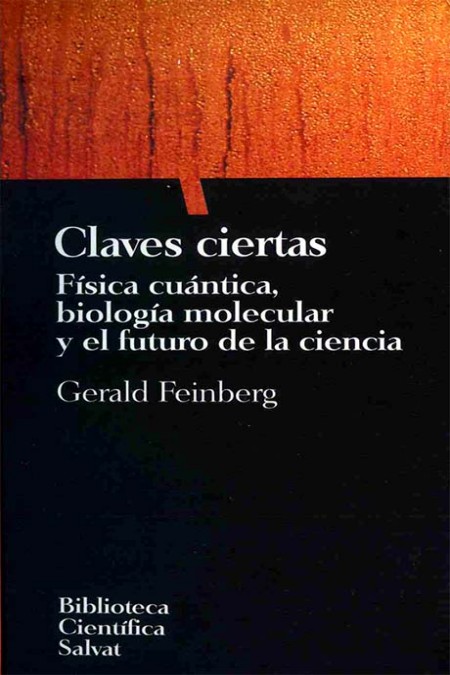
Claves ciertas
A contemplative exploration of how physics and biology will evolve in the coming decades. Through rigorous analysis of scientific methodology and the drivers of change—from new experimental techniques to advances in mathematics and shifts…
Descargar
3 formatos
A contemplative exploration of how physics and biology will evolve in the coming decades. Through rigorous analysis of scientific methodology and the drivers of change—from new experimental techniques to advances in mathematics and shifts in public funding—the author constructs a vision of future discoveries that will reshape our understanding of the universe and life itself.
- Idioma
- Español
This work presents a systematic attempt to forecast the trajectory of scientific advancement, concentrating on physics and biology—the two disciplines advancing most rapidly. The author argues that predicting scientific change is not merely possible but necessary: to guide public investment, focus research priorities, and illuminate the shape of human knowledge to come.
The foundation rests on a clear premise: science advances through studying increasingly complex phenomena, building coherent systems of principles that extend across domains. These principles form the backbone of contemporary worldview. Yet predicting radical departures from current understanding—discoveries entirely unexpected by existing theory—remains the ultimate challenge.
The author identifies the primary engines driving scientific transformation. Experimental technique stands foremost: new instruments of observation open entirely new domains. History repeatedly demonstrates that tools like radiotelescopies or X-ray crystallography do not merely refine existing knowledge but reveal phenomena never before imagined. Mathematics, too, acts as crucial catalyst; when scientists discover mathematical structures that naturally describe complex phenomena, understanding crystallizes.
Beyond technique and mathematics, societal forces shape science’s future. Public funding—emerging from postwar support and national priorities—determines what questions get asked and what resources deploy. This intersection of internal scientific logic and external social forces creates the landscape where future discoveries emerge.
The author distinguishes between physics, whose principles apply across all domains, and biology, whose phenomena remain best understood through distinctly biological concepts. While these disciplines will converge through molecular biology and shared mathematical tools, biology is unlikely to collapse entirely into physics. Each maintains its own research agenda.
By mapping current knowledge gaps and analyzing forces that reshape scientific practice, the author constructs a framework for understanding how science will come to know.
- Título
- Claves ciertas
- Autor
- Gerald Feinberg
- Idioma
- Español